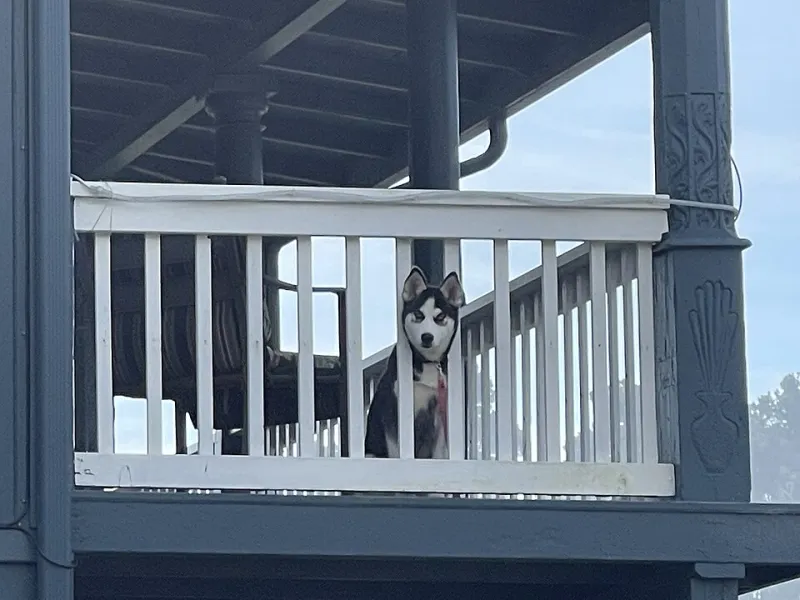
Before You Unclip That Leash: A Husky Owner's Field Guide to Dog Parks, Playdates, and Knowing When to Walk Away

Photo by Photo by Monika Simeonova on Unsplash on Unsplash
Let's be honest: the dog park is where husky owners go to feel a little anxiety. On one hand, your Siberian was bred to run all day with other dogs. On the other, you've got a 50-pound escape artist with opinions about small, fast-moving things and a play style that makes retriever owners clutch their pearls.
The good news? Dog parks can absolutely work for huskies. The better news? You get to decide which ones, which days, and which moments. Here's how to make that call with confidence.
Know What You're Walking In With
Before we talk about the park, let's talk about your dog. Huskies bring three things to the party that other owners may not expect:
Rough play. Huskies wrestle like sled dogs — full contact, mouthy, slamming shoulders. Perfectly normal between huskies. Terrifying to a nervous poodle mix.
Prey drive. Small dogs, squeaky toys, running children — anything that flees can flip a switch in your Siberian's brain. This isn't aggression; it's instinct. But it looks the same to everyone else.
Stamina. Your husky will still be fresh when every other dog at the park has tapped out. An over-tired, over-stimulated husky is where trouble usually starts.
The Husky-Safe Park Checklist
Not all dog parks are created equal. Before your first visit, do a lap — without your dog — and ask yourself:
- Is there a double-gated entry? Single-gate parks are how huskies end up three neighborhoods away.
- How's the fence? Huskies climb, dig, and squeeze. A four-foot chain-link fence sitting on bare dirt is a suggestion, not a barrier.
- Is the park crowded? Fifteen dogs in a small space turns play into chaos. Look for parks with room to spread out.
- Are there small dogs mixed in? Some parks have separate areas for small and large dogs. These are your friend.
- Can you see the whole space? Blind corners mean you can't intervene until it's too late.
- What's the vibe? Are owners watching their dogs, or scrolling their phones? The humans are as important as the dogs.
If a park fails two or more of these, keep driving. There's no shame in it.
Reading Your Husky's Body Language
Huskies are expressive, but their play signals can be misread by other owners. Learn to tell the difference between the good stuff and the warning signs.
Healthy husky play looks like: play bows, loose wiggly bodies, self-handicapping (rolling over so a smaller dog can "win"), and frequent breaks. Husky play is loud — growls, screams, dramatics — but the dogs keep coming back for more.
Time to intervene when you see: one dog pinned repeatedly and trying to escape, hackles raised with a stiff body, play that stops being mutual, your husky fixating on a small dog, or the classic husky move of grabbing another dog by the scruff and dragging them around "for fun."
The rule of thumb: interrupt every few minutes anyway. Call your dog over, reward them, and send them back out. This keeps arousal levels down and teaches your husky that checking in with you is worth it.
When Play Goes Wrong
Even with good management, scuffles happen. Here's your script:
- Stay calm and don't grab collars. Two people reaching for dogs in a scuffle often makes things worse. Try a loud verbal interrupter first.
- Use the wheelbarrow method if you must separate. Each dog's owner grabs their own dog's hind legs and lifts slightly, backing away.
- Apologize, assess, and exit. If your husky was the instigator, own it, check on the other dog, and leave. Ending the session on a scuffle teaches your dog nothing good.
- Don't punish after the fact. Dogs don't connect scolding to something that happened five minutes ago. Just remove the opportunity.
Great Alternatives When the Park Isn't It
Honestly? Some huskies are better served skipping the public park entirely, and that's fine. Consider:
- One-on-one playdates with a known husky-compatible friend. This is the gold standard.
- Daycare with a husky-savvy staff — call ahead and ask how they handle high-arousal breeds.
- Structured outlets like bikejoring, hiking on a long line, or scent games that satisfy the drive without the chaos.
A tired husky with a full tank of appropriate exercise is a much better dog park candidate anyway.
The Bottom Line
Your Siberian doesn't need the dog park. Your Siberian needs safe, supervised, breed-appropriate outlets for energy and social drive. If your local park checks out on the checklist, your husky plays well, and you're actively engaged — great, go have fun. If not, there's no trophy for forcing it.
The best husky owners aren't the ones with the most freedom-giving confidence. They're the ones who know exactly when to unclip the leash — and exactly when to keep walking.