The 3 A.M. Wake-Up Call Is Not a Personality Trait: Resetting Your Husky’s Internal Clock

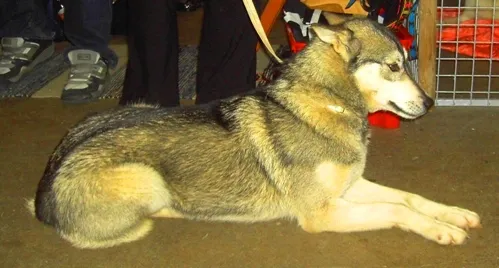
Photo: Siberian husky awake at night in bedroom looking at camera, via cf.ltkcdn.net
It is 3 a.m. Your husky has dropped a toy on your face, clicked across the hardwood like a tap dancer, and is now staring at you with the intensity of a dog who has a very important meeting. You are running on coffee and resentment. The good news is that this is usually not a permanent personality flaw. It is a schedule problem, a light problem, an exercise problem, or a training problem wearing a fur coat.
Your Husky Is Not Spiteful; Your House Is Sending Wake-Up Signals
Dogs do not have a human alarm clock, but they do have circadian rhythms, and those rhythms are shaped by light, meals, activity, and social cues. If your husky gets a big evening meal, a late nap, a bright living room, and a response every time they ask for attention at 3 a.m., your house is quietly teaching them that 3 a.m. is a reasonable time to start the day. Huskies are smart, active, and bred for endurance. They are also excellent at learning exactly which behavior gets the human out of bed.
The Dawn and Dusk Thing Is Real, but It Is Not a Free Pass
Siberian huskies often have strong energy at dawn and dusk. That is not a myth. It is also not an excuse for a 3 a.m. party. A healthy adult husky can learn that morning starts when the household alarm goes off, not when the neighborhood squirrel shifts position. The goal is not to suppress all dog energy. The goal is to move that energy into legal outlets and anchor the day with predictable cues.
The Habits That Accidentally Teach a 3 A.M. Party
The usual suspects are not dramatic. They are tiny, repeated, and very effective. You get up and let the dog out because you are worried about an accident. You feed breakfast because it is easier than listening to the whining. You toss a toy because you want ten more minutes of sleep. You turn on a light. You talk to the dog. You let the dog on the bed for a cuddle. From your side, you are surviving. From your husky's side, you are rewarding the 3 a.m. shift change.
Other habits matter too: inconsistent bedtimes, long evening naps, a big meal right before bed, no morning light exposure, and a bedtime routine that changes every night. Huskies do best with routines they can predict. If your routine is 'whatever happens, happens,' your dog will fill in the blanks, and your dog's version of the schedule may include a 3 a.m. howl.
Rule Out the Medical Stuff First
Before you build a training plan, make sure your husky is healthy. A sudden change in nighttime behavior can be a urinary tract infection, gastrointestinal upset, pain, medication side effect, or cognitive change in an older dog. Puppies and senior dogs have different bladder and sleep needs. If your dog is pacing, panting, crying, or asking to go out more often, call your veterinarian. This article is for the healthy adult husky who has simply learned that night is negotiable.
Build the Reset: Week by Week
Week 1: Anchor the Day
Pick a morning wake-up time and stick to it, even on weekends. Open the curtains and get your dog into daylight as soon as possible. Feed meals at consistent times. Set a firm last-potty time and a calm bedtime routine. If your dog wakes at 3 a.m., take them out only if you genuinely suspect they need to potty. Keep it boring: leash on, no talking, no play, no lights beyond what you need, straight back to bed. If they are safe and healthy, do not start the day.
Week 2: Move the Energy
Increase daytime exercise and mental work. A long sniff walk, a training session, a puzzle feeder, or a supervised chew can do more for nighttime sleep than a frantic game of fetch at 9 p.m. Avoid vigorous exercise right before bed, because a wound-up husky is not a sleepy husky. Move the last big meal earlier if your vet approves, and make sure water is available but not a giant bowl right at bedtime.
Week 3: Protect the Sleep Environment
Use blackout curtains if early summer light is waking your dog. Use white noise to mask hallway sounds. If your dog sleeps in a crate, make sure the crate is comfortable and not used as punishment. If your dog sleeps loose, close doors and remove toys that make noise. Reward calm behavior during the day so your dog has a clear picture of what 'settle' means. Practice settling on a mat while you watch TV. That skill transfers to nighttime.
Week 4: Hold the Line
Expect progress to be uneven. Some dogs adjust in two weeks; others need six. Track wake-ups on a calendar. If your dog is quiet until 5 a.m., that is progress. If your dog is still screaming at 3 a.m., review the plan and call in a trainer or veterinary behaviorist. Do not add more chaos. Consistency is the whole game.
What Not to Do
Do not yell, chase, or punish your husky for waking you up. That adds stress and attention without teaching a new schedule. Do not feed breakfast at 3 a.m. unless your vet has told you to. Do not turn the crate into a punishment zone. Do not let your dog out to run the yard in the middle of the night, because that is a party, not a potty break. And do not expect a husky to sleep through the night if they have been sleeping all evening and getting zero mental work during the day.
The Realistic Timeline
Most healthy adult huskies can learn a new nighttime routine in three to six weeks if the humans are consistent. The first week is the hardest. The second week is when you start to doubt yourself. The third week is when you notice that 3 a.m. is getting quieter. By the fourth week, you may actually sleep. If your dog is in distress, not just annoying, get veterinary help. But if your husky is simply running the household clock, take back the schedule with patience, light, exercise, and boring middle-of-the-night potty breaks. Your future self, and your coffee maker, will thank you.